Childhood Security and Family Neglect
The CallerChildhood Security and Family Neglect names a central contrast in the novel: a child’s sense of safety can become the ground on which a life rests, while its absence leaves a person searching for somewhere to belong. Through Konrad Sejer’s memories of his own childhood, his recollection of Ole, and Johnny Beskow’s account of his home, the theme asks how care—or its failure—shapes a child’s expectations and later conduct. The attack on the Sundelin family adds a counterpoint: even a home once taken for granted as secure can be made strange by fear.
Security as a Foundation
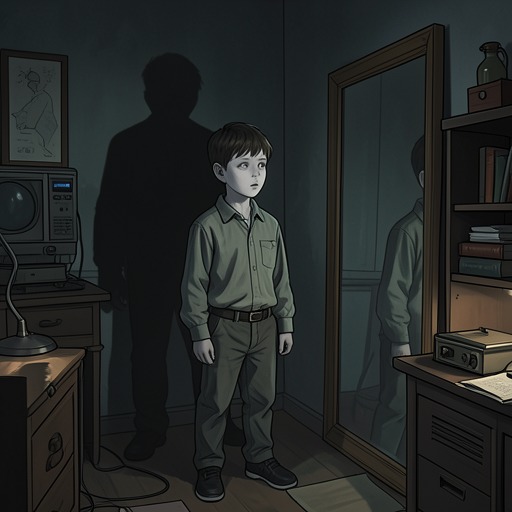
Walking with Frank through the city in mid-September, Konrad Sejer remembers security not as an abstract virtue but as the certainty that an adult would take charge when something went wrong. After he broke his wrist falling from his bicycle, his mother held him and assured him that things would be all right; when his dog died, she again comforted him. Her words mattered alongside the physical reassurance of her arm and the confidence of her voice. Sejer understands that dependable care as the foundation on which his life rests.
His memories give that security a particular home and landscape: the white house on Gamle Møllevej outside Roskilde, hollyhocks against the wall, small white hens in the garden, sour currants picked with Ole, and the pleasure of making faces at their taste. At the end of the day, Sejer could return without fear and feel uniquely welcomed and loved. The smallness of these details is important to the contrast: safety appears in ordinary routines, in a child’s freedom to play and in the expectation that home will receive him.
Ole and the Experience of Neglect
Ole’s childhood shows what that welcome can look like when it is withheld. His mother repeatedly sent him away, offering changing reasons: the weather was fine, she was cleaning, a friend was visiting, or she had a migraine. He left in rain, storm, or cold, then sometimes slipped back into the house in the evening to make himself a sandwich and tiptoe to bed. Sejer compares him to a masterless dog, an image that captures both his lack of care and his precarious place in the home.
The deprivation is not presented as a single spectacular act of violence. There was no violence in Ole’s house, and nobody drank, but Sejer concludes that no one loved him either. That distinction broadens the theme beyond visible abuse: a child can be left insecure through exclusion and indifference even where more dramatic forms of harm are absent. Sejer rejects the idea that parents cannot be blamed for the misery their children experience. In his judgment, children are vulnerable to a mother’s moods, anger, doubt, bitterness, and shortcomings, as well as to a father’s despair, absence, and lack of attention. This is Sejer’s emphatic moral view, grounded in the childhood he witnessed, rather than a claim that every later hardship has one simple cause.
Johnny Beskow’s Home and Responsibility
Johnny Beskow’s account of his mother brings the theme into the present. In a scene set on a Sunday, she moves restlessly through a bedroom crowded with dirty laundry and scattered belongings, picking things up and putting them down without bringing order to the room. She rarely does washing and does not go to work or appear in public unless she needs to scrape together money. The narration renders the house through disorder and movement; the following chapter makes clear that this scene also belongs to Johnny’s bitter view of his home life.
When Konrad Sejer asks about life with his mother at Askeland, Johnny says that she is never sober and takes her anger out on him. He calls this unfair. Sejer acknowledges the unfairness, then asks whether Johnny has treated other people fairly: Gunilla Mørk, Astrid and Helge Landmark, Frances and Evelyn Mold, and Karsten and Lily Sundelin. Johnny’s angry reply—that fairness has not been shown to him—makes the conflict plain without resolving it in his favor. He has admitted that frightening people was fun and described it as a game, while insisting that he did not mean to hurt anyone. Sejer answers that the harm was real and may last for years. The novel allows neglect to illuminate Johnny’s grievance, but it does not make that grievance an excuse for the fear and pain he caused.
Security Shaken in the Sundelin Home
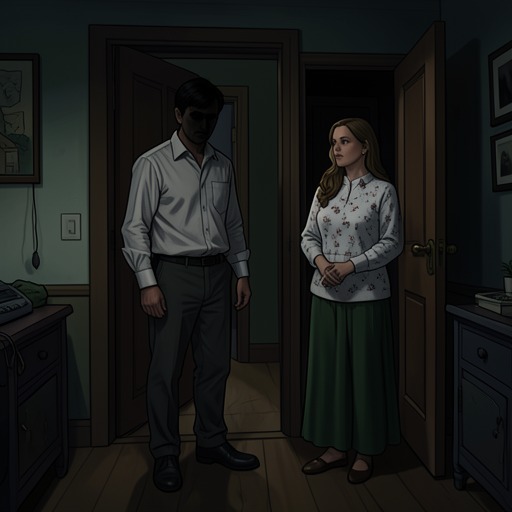
The Sundelins provide a different case: their distress follows an attack against Margrete rather than a history of parental neglect. A few weeks afterward, Karsten wakes at half past three and finds both Lily and the baby absent from their bed. He discovers them in the dim lounge, where Lily is sitting with Margrete asleep in her lap. He understands that fear has taken root in Lily and stolen the peace and ordinary confidence the family once possessed. The intrusion feels to him like an unfamiliar presence between them, shadowy and difficult to name.
As time passes, the injury to the family’s sense of safety becomes a strain on the marriage. Karsten’s temper grows sharper; he slams doors and recognizes that he no longer loves Lily as he once did, even beginning to dislike the fear and vulnerability he sees in her. He despairs that he may have failed them because he could not protect them. At night, with Margrete between them in bed, he sometimes reaches carefully toward Lily’s shoulder or hair, repeating a gesture that once belonged to their intimacy. She shudders away, and he struggles to understand the new rules she has made. The attack has not only frightened an individual: it has changed how the parents inhabit their home and respond to one another.
Private Harm and Public Attention
The novel places these domestic vulnerabilities beside a community eager to turn frightening incidents into spectacle. After the blood-soaked-baby story, newspaper headlines call the discovery grotesque and sensational. Journalists gather outside the police department, and Jacob Skarre remarks on the case’s drama and originality. Konrad Sejer worries that newspapers may give a criminal the attention he wants, while also considering whether silence could make the perpetrator more dangerous. The press’s appetite and the family’s actual fear exist side by side, but they are not the same thing: public excitement does not undo the private loss of security.
The later response to the prank campaign also shows how suspicion spreads. Gunilla Mørk doubts Bjørn Schillinger’s claim of sabotage, yet keeps her fabricated obituary in a small silver frame and reads it each morning, finding satisfaction in the reminder that she is still alive. Her response registers both the prankster’s ability to disturb people and the way an injury can become part of a person’s daily life. Against such public narratives, Sejer’s memories insist on the quieter conditions that matter: being welcomed home, being comforted when hurt, and having adults whose attention does not make a child feel disposable. The theme holds together two cautions: deprivation deserves recognition, and understanding a person’s childhood does not erase responsibility for what that person does to others.